TL;DR
- —Visibility builds credibility. Leads build revenue. The two aren't the same.
- —PR hits, LinkedIn posts, and media features get you noticed — but they're often a flash in the pan. They rarely translate directly into new business.
- —Leads require a process: Awareness → education → trust → action. Consistent touchpoints move someone from noticing you to choosing you.
- —CAC goes up when you confuse the two. Visibility without nurture is expensive noise.
- —Actionable steps today: Create one strong magnet. Build a focused list of 100 ideal accounts. Start personalised outbound conversations. Set up a simple nurture loop.
- —Outbound = short-term hustle. Cold still works in 2025 — but only with personalisation, multi-channel touches, and AI assist.
- —Inbound = long-term engine. Consistency, community, and owned lists build trust so leads come to you — warm.
- —Bottom line: Visibility is the spark. Leads are the fire. You need both — but don't confuse one for the other.
Visibility: What It Actually Delivers
Visibility is the work we do to be seen: PR hits, a Straits Times feature, a CNBC mention, LinkedIn posts, company blogs. These things give you legitimacy. They signal: "We're here. We're credible. You can trust us."
That has real value. You can't buy the kind of third-party validation that comes from being featured in the media or having your insights shared widely on LinkedIn.
But visibility is often a flash in the pan. One big feature spikes awareness for a day or two, then fades. Very few B2B buyers will ever say, "I read your quote in the Straits Times, so I decided to buy." It doesn't work that way. Visibility makes you recognisable. It puts you in the consideration set. But without a system to follow up and guide that interest, the spark dies quickly.
Leads: A Different Beast
A lead isn't someone who just saw your brand name. A lead is someone who:
- Noticed you.
- Showed interest.
- Engaged with what you had to say.
- Trusted you enough to take the next step.
That doesn't happen overnight. In B2B, decision-making is slower, more complex, and often involves multiple stakeholders. It requires education, repeated touchpoints, and confidence that you're the right partner. That's why leads aren't created by a single blog post or a media hit. They're created by a process: awareness → education → trust → action.
Contrast this with B2C. If I'm in pain, I might book the chiropractor I just saw on Instagram because the timing is right. In B2B, no CFO or CIO is signing a services contract because of one LinkedIn post. They might notice you there, but the journey from noticing to buying is a much longer road.
The Cost of Confusing the Two
When businesses treat visibility as lead generation, they overspend and overestimate.
Customer Acquisition Cost (CAC) is the best lens to see this through. If you're pouring money into visibility — PR retainers, content, social posts — but have no system to convert that visibility into leads, your CAC goes up. You're paying for attention that doesn't translate into opportunities.
Visibility is important. But visibility without nurture and follow-up is expensive noise. CAC only improves when visibility is connected to a structured lead engine: magnets, outreach, and conversion processes.
Ask These Questions to Separate Visibility from Leads
Here's how to know whether you're chasing visibility or leads.
If visibility is your focus, ask:
- Who is engaging with my content?
- Where are they finding it?
- How are they interacting with it?
If leads are your focus, ask:
- Where have my past clients actually come from?
- What does my sales cycle look like, and how long does it take to close?
- What happens once someone shows interest? Do I follow up, nurture, stay in touch?
- Which assets or offers have actually triggered deals before?
If you can't answer the second set, you don't have a lead system. You just have visibility.
Immediate Actions to Generate Leads
So what can you do right now if leads are the priority?
Pick one magnet
Create something prospects actually want: a checklist, diagnostic tool, or short playbook. It gives you a reason to start conversations.
Build a focused target list
Don't fall into the trap of blasting thousands of random contacts. Define your ideal customer profile — the type of company and buyer you really want (industry, size, role, geography). From there, hand-pick around 100 accounts that fit. 100 carefully chosen accounts beats 1,000 random ones every time.
Start outbound conversations
Cold outreach is uncomfortable, but sometimes necessary. The key is to keep it human: thoughtful LinkedIn DMs, sharing your magnet, asking a smart question, or inviting a low-commitment chat.
Set up a simple nurture loop
If you don't have an email list yet, start building one now. Even a small list is the seed of a future community. A basic 3-email drip can work:
- Email 1: Share the resource.
- Email 2: Offer a practical tip.
- Email 3: Invite a call or conversation.
This isn't about perfection. It's about creating a bridge between visibility (being seen once) and leads (being guided into trust and action).
Inbound vs. Outbound: Playing the Long and Short Game
Most immediate actions fall under outbound — where you're reaching out first. While it's not glamorous, it's still powerful. In 2025, more than half of B2B leads still originate from cold outreach. Even a 2% reply rate on 100 well-targeted messages means two real conversations — enough to kickstart pipeline.
Inbound is where things shift. Inbound leads happen when someone comes to you. Inbound cold means they found you through a post, an event, or a referral but don't know you yet. Inbound warm means they've been following your content, reading your insights, maybe subscribed to your newsletter — and by the time they reach out, they already trust you.
Inbound is a long-term play. You build it by consistently showing up with valuable content, creating magnets that attract the right audience, and nurturing with regular touchpoints. Most importantly, by building a community — not just a list of contacts, but a space where people feel connected to your ideas and your brand.
That's why building an email list is so critical. Social visibility comes and goes. An email list, grown over time, is an owned community where you can build deeper trust and turn awareness into long-term relationships.
From Being Seen to Being Selected
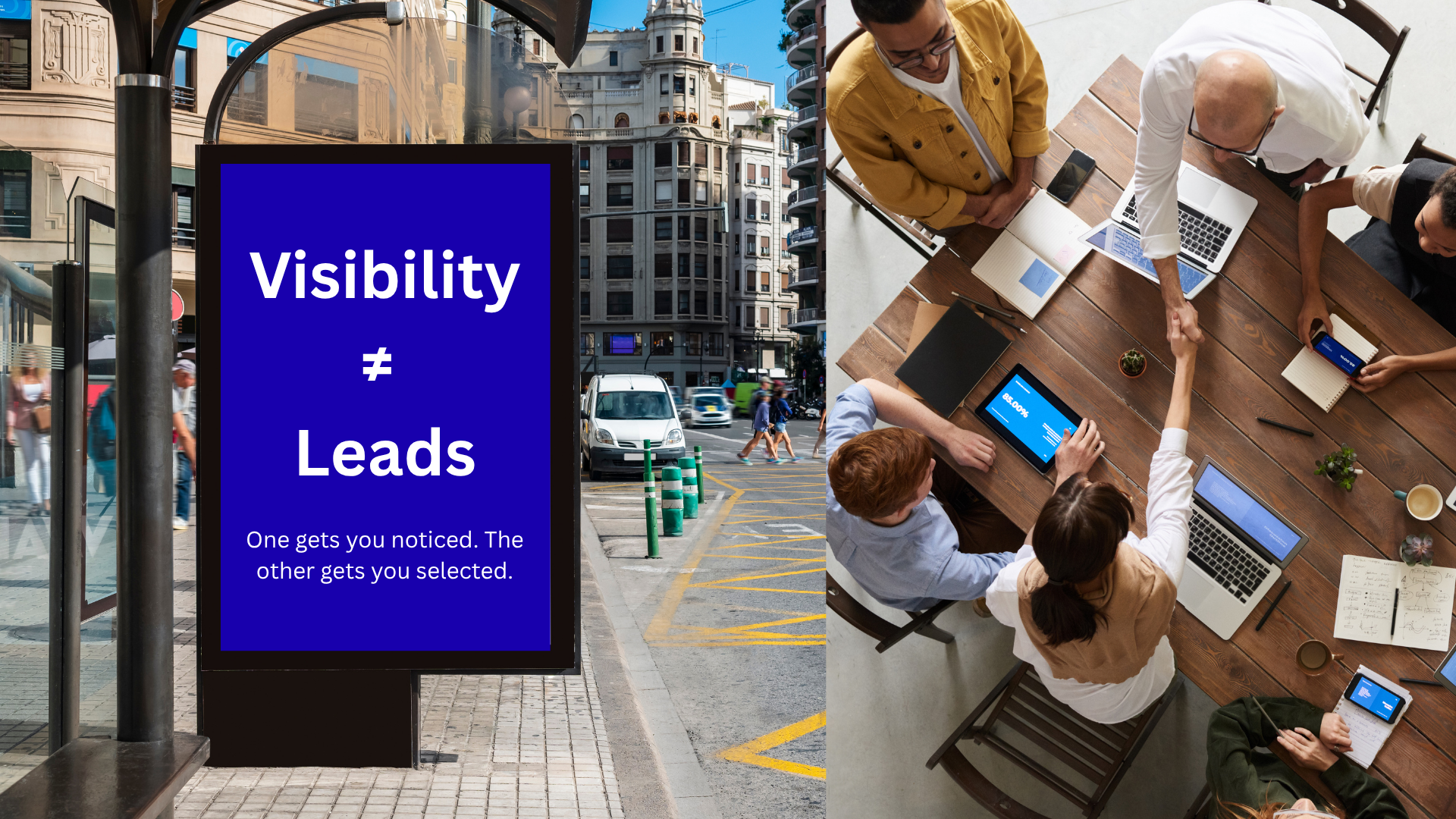
Visibility ≠ leads. Visibility is being seen. Leads are being chosen.
PR, articles, and social posts absolutely have value. They give you credibility and recognition. But they are the spark, not the fire. If you want leads, you need to take that visibility and build a system to capture, nurture, and convert it.
The real question is simple: Are you investing in being seen, or in being chosen — and do you know which one your business really needs right now?